For most children, paying for assessment and early treatment costs less—in money, time and disruption—than waiting for pain, infection or a damaged bite. You will be able to judge the likely cost, recognise when care is urgent, compare treatment options and choose a clinic based on the complete treatment plan rather than a promotional starting price.
Key takeaways
- Arrange urgent care for pain, swelling, trauma, cavities or eating difficulty.
- Book a first dental visit by age 1 or when the first tooth appears.
- Ask for an itemised estimate before agreeing to treatment.
- Compare prevention, follow-up care and communication—not price alone.
When does a child need dental care rather than watchful waiting?
Pay for a dental appointment now when a child has pain, swelling, trauma, a visible cavity, or trouble eating. Do not wait for pain before arranging the first assessment: a child should see a dentist by 12 months of age or when the first tooth appears.
That visit is often a short risk check, not an automatic treatment bill.
Arrange prompt child dental care in Diva if you notice:
- Toothache, sensitivity to hot or cold, night pain, or waking because of discomfort
- Facial or gum swelling, fever, pus, bad taste, or difficulty opening the mouth
- A chipped, loosened, displaced or knocked-out tooth after an injury
- White, chalky, brown or black spots, a hole, food trapping, or difficulty chewing
- Persistent night grinding or mouth breathing, especially with poor sleep or jaw discomfort
| Situation | Why waiting costs more | Sensible action |
|---|---|---|
| Small cavity or deep groove | Decay can reach the nerve and require pulp treatment or extraction | Book an examination soon |
| No symptoms but high risk | Sugar exposure, enamel defects or previous decay can hide rapid damage | Arrange preventive review and ask about fluoride or sealants |
| Swelling, fever or severe pain | Infection can require urgent care and disrupt sleep, eating and school | Seek same-day dental advice |
Untreated primary-tooth decay can cause infection and premature extraction. Losing a baby tooth early can also reduce space for its permanent replacement. For dental treatment for children in Diva, early assessment usually protects cheaper options such as prevention or a small filling; review intervals may range from three to six months for high-risk children.
What happens at the first visit, and how often should children return?
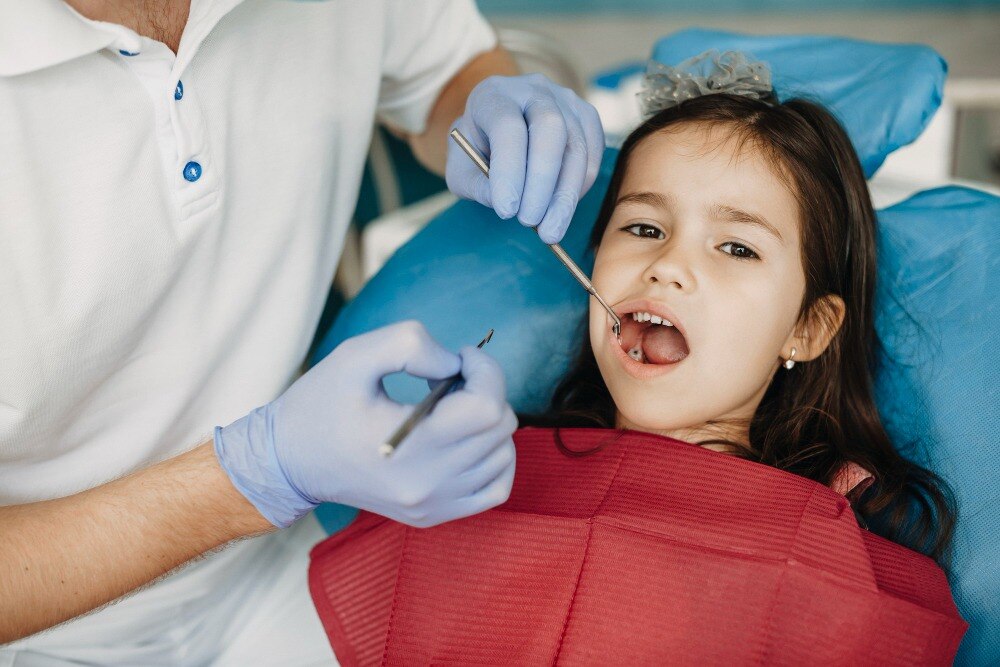
A first dental visit should happen by 12 months of age or when the first tooth appears, whichever comes first. It is usually a short risk assessment, not an automatic treatment appointment.
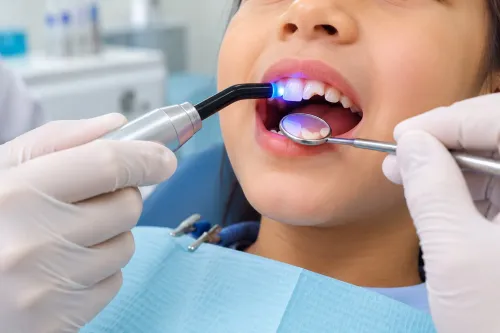
The dentist examines teeth and gums, asks about brushing, fluoride toothpaste, sugary drinks, feeding and previous problems, then explains what to do at home.
During child dental care in Diva, expect these practical steps:
- Count and inspect the teeth for decay, enamel defects, white or brown spots, gum problems and bite development.
- Discuss brushing technique, fluoride use, snacks, bottle or breastfeeding habits and thumb-sucking.
- Take X-rays only when the examination and age make them useful; they are not routine for every child.
- Create a review plan and explain whether fluoride varnish, sealants or treatment is needed.
- If sedation is proposed, request a written plan naming the dentist, anaesthesia provider, monitoring, fasting instructions, alternatives and recovery arrangements.
When selecting a kids dentist near Diva, verify that the treating dentist is registered to practise in India. Ask whether the clinician has MDS training in Pediatric and Preventive Dentistry, or experience with young children, pulp therapy, special-health-care needs and referrals.
Do not default to six-month visits. Active decay, enamel defects, frequent sugar exposure, braces or extensive past treatment may require reviews every three to six months; a low-risk child may need fewer visits. Base the interval on the child’s caries risk and follow the clinician’s written schedule.
What does pediatric dental treatment cost in Diva?
A low advertised filling fee is not the full pediatric dentist cost in Diva. The bill may include consultation and examination, fluoride treatment, sealants, X-rays, local anaesthetic, the procedure itself, follow-up visits, laboratory work, sedation, taxes and a space maintainer.
Dental treatment for children in Diva becomes more expensive when decay reaches the nerve, several tooth surfaces need repair, or a child needs extra behaviour-management time.
Ask for a written, itemised estimate before treatment. Check whether it includes:
- The consultation, clinical examination and required X-rays
- Fluoride varnish, sealants and preventive advice
- Local anaesthetic, filling material and follow-up review
- Pulpotomy, extraction, sedation or laboratory charges
- A space maintainer after early extraction
- The fee if a filling fails or symptoms continue
| Option | What the charge covers | What makes it rise or fall |
|---|---|---|
| Consultation and examination | Risk assessment and treatment plan | Visit length, complexity and X-rays |
| Fluoride or sealant | Decay prevention | Number of teeth treated and material used |
| Filling | Repair of a cavity | Tooth, number of surfaces, material and cooperation |
| Pulpotomy or extraction | Treatment of an infected or non-restorable tooth | Infection, anaesthesia, sedation and difficulty |
| Follow-up or space maintainer | Review or preservation of tooth space | Appliances, laboratory work and future adjustments |
Compare preserving a restorable primary molar with extraction plus a space maintainer and later orthodontic care. The cheapest single procedure can create the costliest treatment course.
Is early treatment cheaper than delaying a cavity or tooth problem?
Early treatment is usually cheaper overall than waiting, even when extraction costs less upfront. A small cavity can need a filling; delay can bring pain, infection, missed school, emergency care and a larger bill.
| Option | Immediate cost and effort | Cost of waiting |
|---|---|---|
| Prevention | Fluoride, brushing advice and diet changes; sealants protect deep grooves on at-risk molars | Usually the lowest-cost route; prevents fillings when decay has not started |
| Filling | Treats a restorable cavity with one planned visit | A deeper cavity can require pulp treatment and a stainless-steel crown |
| Pulp treatment | Preserves a primary tooth that must remain for months or years; adds treatment and crown costs | Infection, night pain or swelling can turn planned care into urgent care |
| Extraction | Often cheaper than saving a badly damaged tooth | Early loss of a primary molar can require a space maintainer and later orthodontic management |
| Waiting | No treatment cost today | Decay can spread, impair eating and sleep, and remove simpler treatment options |
There is no single pediatric dentist cost in Diva: the fee changes with tooth location, cavity size, X-rays, materials, behaviour-management time, sedation and follow-up. Ask for an itemised estimate covering examination, fluoride or sealants, anaesthesia, reviews and space maintenance. Is pediatric dental treatment worth it in Diva?
Usually, yes—compare preserving the tooth with extraction plus years of follow-up, not with extraction alone.
How should you compare a child dentist and the total value of care in Diva?
The best value is not the lowest filling fee; it is care that prevents repeat treatment, pain and lost school days. To decide “is pediatric dental treatment worth it in Diva,” compare the clinician, setting and support around the procedure, not just the advertised price.
| What to verify | Why it affects value |
|---|---|
| Treating dentist’s registration in India and MDS in Pediatric and Preventive Dentistry | Confirms professional registration and relevant postgraduate training. A general dentist may treat routine cases, but ask about referral plans for complex pulp therapy, special-health-care needs or sedation. |
| Child-focused setting and behaviour-management plan | A calm approach can prevent a frightened child from needing repeated visits or treatment under sedation. Ask who monitors sedation and where emergencies are handled. |
| Written follow-up schedule | Confirm when the filling, pulpotomy, extraction or space maintainer will be reviewed. Primary molars often need monitoring until permanent teeth replace them. |
| Emergency contact and response arrangements | Ask who answers after hours, where to go for swelling, fever, uncontrolled bleeding or dental trauma, and whether emergency fees are separate. |
Before booking a kids dentist near Diva, request:
- An itemised estimate covering examination, X-rays, anaesthesia, treatment, follow-up, taxes and failed-treatment contingencies.
- The clinician’s experience with your child’s age, anxiety level and medical history.
- A comparison between saving a restorable tooth and extraction plus space maintenance or later orthodontic care.
Sai Dental, Implant And Orthodontic clinic can be included in your comparison, provided it answers these questions clearly and documents the proposed treatment.
Related service
Pedodontics Treatment Pedodontics, also known as pediatric dentistry, is a specialized field of dentistry focused on the dental health of children from infancy through... View service → |
Frequently asked questions
When does a child need dental care rather than watchful waiting?
Arrange an appointment for pain, swelling, trauma, a visible cavity or trouble eating. Do not wait for pain before the first dental assessment.
What happens at a child’s first dental visit?
The dentist checks the teeth, gums, bite and oral habits, discusses diet and brushing, and recommends treatment or monitoring based on the findings.
How often should children return to the dentist?
The dentist sets the recall interval according to cavity risk, oral hygiene, tooth development and active treatment. Follow the recommended review date rather than waiting for symptoms.
What does pediatric dental treatment cost in Diva?
The cost depends on the examination, treatment type, materials, sedation needs and number of visits. Request a written, itemised estimate from the clinic.
Is early treatment cheaper than delaying a cavity or tooth problem?
Early assessment can limit a problem to preventive care or a smaller restoration. Delaying treatment can lead to pain, infection, emergency visits or more complex procedures.
Keywords